

How to Choose the Right Dental Microscope for Endodontics & General Practice
A practical guide for Malaysian dentists comparing magnification, optics, ergonomics, mounting, documentation and microscope configuration.
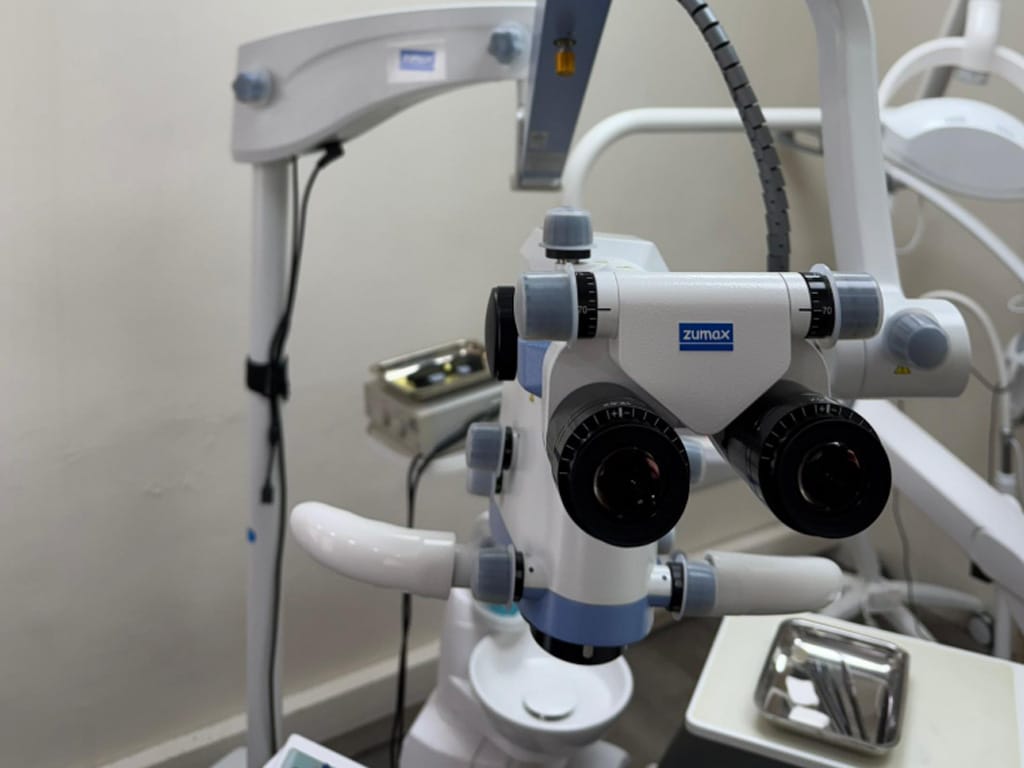
Buying a dental microscope based only on magnification can be an expensive mistake. Arm balance, working distance, illumination, mounting and documentation options can have just as much impact on how comfortably and effectively the microscope fits into your daily clinical workflow.
Quick Answer
For general dentistry, prioritise comfortable positioning, continuous magnification, clear illumination and an appropriate working distance. For endodontics and other procedures requiring fine visual detail, consider a microscope with a wider magnification range, stable positioning and documentation options.
The right dental microscope should match your procedures, operatory layout, preferred working posture and budget—not simply the highest specification available.
Key Takeaways
- Do not compare dental microscopes by magnification alone.
- Optical quality and working distance affect day-to-day usability.
- Arm balance and mounting configuration should match your operatory.
- Endodontic users may benefit from higher magnification and more precise positioning controls.
- Camera and documentation systems are useful when clinical photography, education or case documentation are priorities.
- Compare installation, training, servicing and current warranty terms before purchasing.
Table of Contents
Why Choosing the Right Dental Microscope Matters
Dental loupes and operating microscopes both improve visual access, but they serve different levels of magnification and workflow requirements.
A dental operating microscope combines magnification with coaxial illumination and a stable optical system. Depending on the model and configuration, it can also support photography, video recording and display output.
For clinicians performing endodontics, restorative procedures, prosthodontics, periodontics or other detail-intensive work, the important question is not simply whether a microscope offers enough magnification. It is whether the entire system works comfortably within the treatment workflow.
7 Factors to Compare When Choosing a Dental Microscope
1. Magnification Range
Different stages of a procedure require different levels of magnification.
Lower magnification provides a wider field of view and can make it easier to orientate within the treatment area. Higher magnification can help when examining fine details.
For dentists comparing models, consider:
- Whether magnification is fixed-step or continuously adjustable
- How easily magnification can be changed during treatment
- Whether adjustment is manual or motorised
- Whether the available range suits your most common procedures
For endodontic workflows in particular, a broad magnification range can be useful when moving between general orientation and fine visual inspection.
2. Optical Quality and Working Distance
Magnification numbers alone do not describe the quality of the image.
Look at:
- Image sharpness across the field of view
- Colour reproduction
- Depth of field
- Lens coating and optical clarity
- Available working-distance adjustment
Working distance deserves particular attention because it affects where the microscope sits in relation to the dentist and patient.
The ZUMAX OMS2050, for example, is listed with a VarioDist® objective offering a variable working distance of 190–480 mm.
The OMS2380 R2 and OMS3200-R2 use a 200–450 mm variable working-distance configuration.
3. Illumination
Magnification is much less useful without adequate illumination.
Integrated LED illumination helps direct light through the optical path towards the treatment field, reducing the shadowing that can occur with conventional operatory lighting.
Useful features to compare include:
- LED illumination
- Brightness adjustment
- Available illumination spot sizes
- Yellow and green filters
- Backup illumination on selected models
The OMS2050 and OMS2380 R2 use ZUMAX TrueTone™ LED illumination, while the OMS3200-R2 adds the BriPlus illumination system.
4. Ergonomics and Binocular Positioning
A microscope should allow the clinician to view the treatment area without repeatedly adapting their body position to the equipment.
Compare:
- Binocular inclination
- Interpupillary-distance adjustment
- Eyepiece comfort
- Working-distance flexibility
- Ability to maintain a comfortable head and upper-body position
The ZUMAX models discussed in this guide offer a 0–180° inclinable binocular head, providing flexibility when configuring the microscope around the clinician and patient.
A hands-on demonstration is particularly useful here because ergonomic fit depends on clinician height, preferred working position, chair arrangement and operatory layout.
5. Arm Balance, Manoeuvrability and Mounting
This is one of the biggest differences between microscope systems.
A microscope may need to be repositioned repeatedly during treatment. Poorly balanced movement can interrupt workflow, while a well-configured suspension system can make repositioning more natural.
Mounting choices can include:
- Mobile floor base
- Fixed floor installation
- Wall mounting
- Ceiling mounting
A mobile base provides flexibility between rooms, while a fixed installation may create a cleaner setup in an operatory where the microscope is used frequently.
The OMS2380 R2 adds an advanced balancing-arm arrangement, while the OMS3200-R2 uses the FreeMov® electromagnetic positioning system with magnetic brakes.
Clinic Planning Tip
Choose the mounting method before finalising the microscope configuration
Consider treatment-chair position, cabinetry, lighting, clinician movement and assistant access. The ideal microscope on a showroom floor may require a different mounting configuration inside your clinic.
6. Camera and Documentation Options
Documentation is increasingly important for:
- Clinical photography
- Case documentation
- Patient communication
- Teaching and training
- Displaying procedures on an external monitor
Do not assume every camera option is standard.
For example, the OMS2050 supports camera adaptors and includes a beam splitter, while the OMS2380 R2 offers optional high-definition documentation configurations.
The OMS3200-R2 offers more advanced optional camera and documentation configurations.
Before ordering, confirm exactly which camera, adaptor, recording or display components are included in the quoted configuration.
7. Installation, Training and After-Sales Support
A dental microscope is a long-term equipment purchase, so support after installation deserves the same attention as the specification sheet.
Before purchasing, ask:
- Who will install the microscope?
- What setup or operational training is provided?
- What is covered by the current warranty?
- How are servicing and repairs handled?
- Are replacement components available?
- Who should the clinic contact if the microscope requires technical support?
EDI Dental currently represents ZUMAX dental microscopes in Malaysia and can advise clinics on available models, configurations and current support arrangements.
ZUMAX OMS2050 vs OMS2380 R2 vs OMS3200-R2
| Feature | OMS2050 | OMS2380 R2 | OMS3200-R2 |
|---|---|---|---|
| Magnification Control | Manual continuous zoom | Manual continuous adjustment | Motorised zoom |
| Working Distance | VarioDist® 190–480 mm | VarioDist® 200–450 mm | VarioDist® 200–450 mm |
| Binocular Head | 0–180° inclinable | 0–180° inclinable | 0–180° inclinable |
| Positioning System | Manual suspension system | Advanced balancing arm | FreeMov® electromagnetic system |
| Illumination | TrueTone™ LED | TrueTone™ LED | BriPlus illumination system |
| Filters | Integrated yellow and green | Integrated yellow and green | Integrated yellow and green |
| Documentation | Camera adaptors available | Optional HD documentation | Advanced optional camera configurations |
| SmartMon Display | No | No | Yes |
| Best Fit | General practices and first-time microscope users | Clinicians wanting upgraded movement and flexibility | Specialists and clinics wanting motorised positioning and advanced controls |
Best Fit for Your Practice
General Dental Practice
For a GP introducing microscope-enhanced dentistry, ease of use may matter more than having every advanced feature.
The ZUMAX OMS2050 provides continuous zoom, adjustable working distance, integrated LED illumination and several mounting options without requiring motorised positioning.
Multi-Discipline Practice
Clinicians who reposition the microscope frequently or work across a wider range of procedures may prefer the additional balancing and movement features of the OMS2380 R2.
Endodontic or Specialist Practice
For clinicians who expect the microscope to become a central part of their workflow, the OMS3200-R2 adds motorised magnification, the FreeMov® electromagnetic positioning system and SmartMon display.
Its additional controls may be particularly useful in workflows where the microscope is repositioned and adjusted repeatedly.
Clinics Unsure Which Level They Need
Do not automatically buy the highest specification.
Start with:
- Your main clinical applications
- How frequently the microscope will be used
- Your preferred working position
- Available operatory space
- Whether documentation is required
- Preferred mounting arrangement
- Budget for the complete installed configuration
Then compare models around those requirements.
What Affects Dental Microscope Price in Malaysia?
There is no single useful dental microscope price because the final cost depends on the model and configuration.
Factors that can affect the quotation include:
| Price Factor | Why It Changes the Cost |
|---|---|
| Microscope model | Different models use different optical, positioning and control systems. |
| Mounting configuration | Mobile, wall, ceiling and fixed installations require different hardware and installation planning. |
| Camera system | Photography and video configurations can require additional camera and optical components. |
| Optical accessories | Eyepieces, extenders, beam splitters and other accessories can change the configuration. |
| Installation requirements | Clinic layout and mounting requirements may affect installation. |
| Training and support | Confirm what is included with the supplied package. |
If you are comparing dental microscope prices in Malaysia, ask suppliers to quote the complete configuration rather than comparing the microscope body alone.
For current pricing, contact EDI Dental for a quotation based on the required model and setup.
What to Check Before Buying a Dental Microscope
Use this checklist before making a final decision:
- Test the microscope at your normal working height.
- Check whether the working-distance range suits your posture.
- Move the microscope through the positions you commonly use clinically.
- Compare low and high magnification rather than viewing only one setting.
- Check the field of view and depth of field.
- Test the illumination controls and filters.
- Decide whether you need a camera immediately or may add one later.
- Confirm the exact mounting configuration.
- Confirm which accessories are included in the quotation.
- Ask about current warranty, servicing and technical-support arrangements.
Dental Microscope Options from EDI Dental
EDI Dental supplies ZUMAX dental microscopes for different practice requirements.
General Practice
ZUMAX OMS2050
Continuous zoom magnification, TrueTone™ LED illumination and VarioDist® working-distance adjustment make the OMS2050 a practical starting point for dentists introducing a microscope into general clinical workflows.
Advanced Manual Control
ZUMAX OMS2380 R2
The OMS2380 R2 adds an upgraded balancing system and manual continuous magnification adjustment for clinicians wanting greater flexibility when repositioning the microscope.
Advanced / Specialist
ZUMAX OMS3200-R2
The OMS3200-R2 combines motorised magnification with the FreeMov® electromagnetic positioning system, BriPlus illumination and SmartMon display.
You can also compare the wider
ZUMAX dental microscope range in Malaysia
or explore
ZUMAX dental loupes
if you require portable magnification for routine clinical procedures.
Dental Microscope Support in Malaysia
EDI Dental is the sole authorised distributor for ZUMAX in Malaysia.
When discussing a microscope purchase with the EDI Dental team, clinics can ask about:
- Model suitability
- Mounting configuration
- Available accessories
- Camera and documentation options
- Installation requirements
- Operational training
- Current warranty terms
- Servicing and technical support
- Current availability and quotation
Need help comparing ZUMAX dental microscopes?
Speak with the EDI Dental team about your clinical workflow, operatory layout and preferred configuration. We can help you compare the available options and request a current quotation.
Frequently Asked Questions
What should I look for when buying a dental microscope?
Look beyond magnification. Compare optical clarity, working distance, illumination, binocular positioning, arm balance, mounting options, documentation requirements and after-sales support. The best configuration should match your procedures and operatory setup.
What magnification is useful for endodontics?
Endodontic workflows can benefit from a microscope that provides both lower magnification for orientation and higher magnification for inspecting fine detail. Rather than choosing on maximum magnification alone, consider how easily you can move through the available magnification range during treatment.
What is the difference between the ZUMAX OMS2050, OMS2380 R2 and OMS3200-R2?
The OMS2050 uses manual continuous zoom and is a practical option for general practices. The OMS2380 R2 adds an advanced balancing system and manual continuous magnification adjustment. The OMS3200-R2 adds motorised magnification, FreeMov® electromagnetic positioning and SmartMon display.
How much does a dental microscope cost in Malaysia?
The price depends on the microscope model, mounting configuration, camera system, optical accessories and installation requirements. Request a quotation for the complete configuration rather than comparing the microscope body alone.
Should I choose a mobile, wall or ceiling-mounted dental microscope?
A mobile base provides flexibility between treatment rooms. Wall and ceiling mounting can keep floor space clear and may suit clinics where the microscope is used regularly in a dedicated operatory. The best option depends on the room layout and clinical workflow.
Do I need a camera on my dental microscope?
Not every clinic needs one. A camera can be useful for clinical documentation, patient communication, training and displaying procedures on a monitor. Confirm whether the camera is included or optional when comparing microscope quotations.
Should I try a dental microscope before buying?
A practical demonstration is useful because working distance, binocular comfort, arm balance and positioning are difficult to judge from specifications alone. Where possible, evaluate the microscope using a working position similar to your normal clinical setup.
Where can I buy a ZUMAX dental microscope in Malaysia?
EDI Dental is the sole authorised distributor for ZUMAX in Malaysia. Contact the EDI Dental team to discuss available models, configuration options, current availability and quotation.