

Dental Loupes Maintenance: How to Make Them Last 10 Years
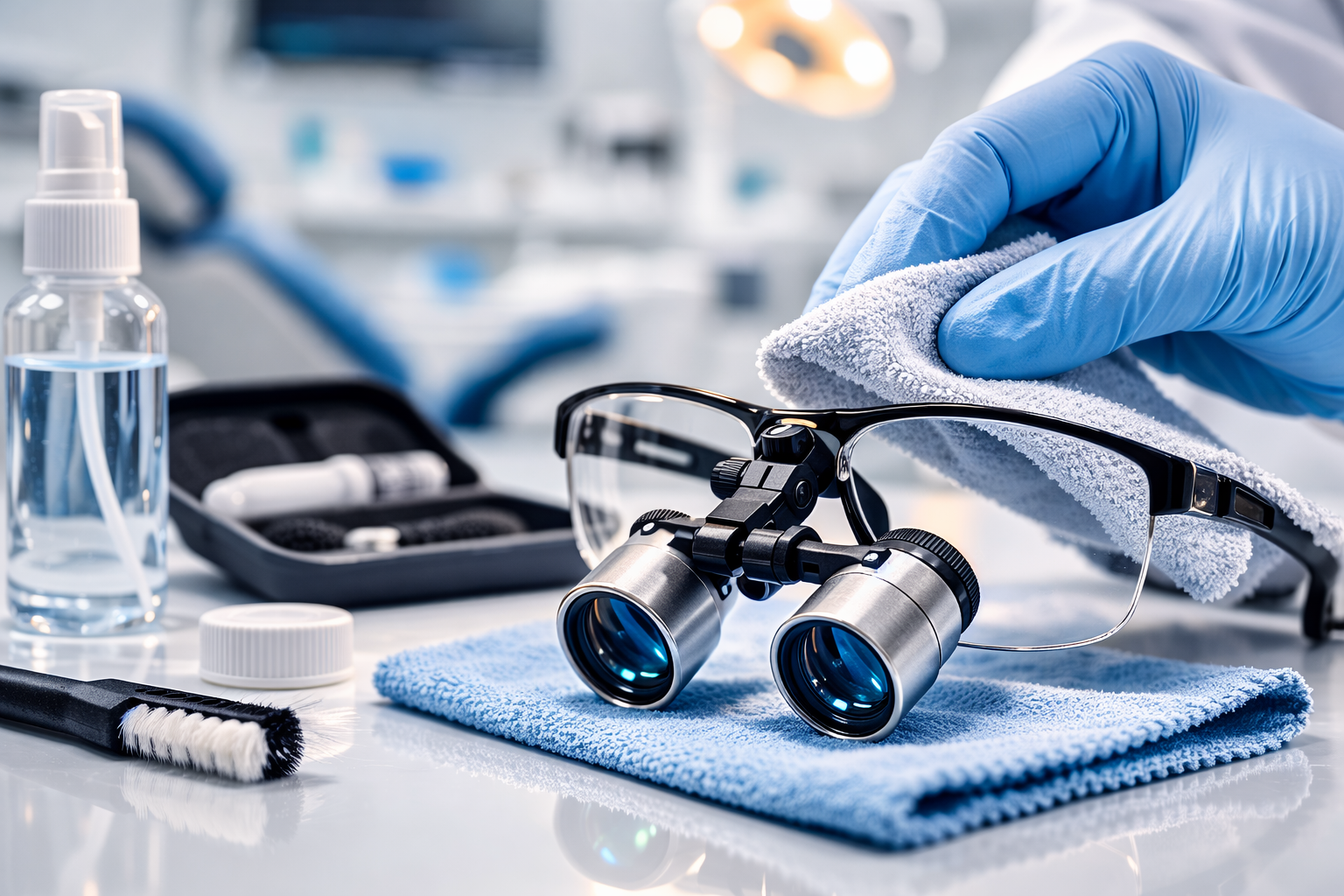
Quality dental loupes are one of the most important investments a dentist can make. Zumax dental loupes, for instance, are built to last up to 10 years with proper care. But reaching that decade mark doesn’t happen automatically — it requires consistent maintenance, correct cleaning habits, and smart storage practices. This comprehensive guide covers everything Malaysian dental professionals need to know about dental loupes maintenance to protect their investment and maintain peak optical performance year after year.
1. Why Dental Loupes Maintenance Matters
Dental loupes are precision optical instruments — not ordinary eyewear. Every component, from the anti-reflective lens coatings to the ergonomic frame hinges, is engineered for clinical-grade accuracy. Without regular maintenance, even the best loupes degrade over time.
Poor maintenance leads to:
- Reduced optical clarity from lens contamination buildup
- Scratched anti-reflective coatings that distort your field of view
- Loose hinges causing misalignment and eye strain
- Frame warping that shifts your working posture — undoing the ergonomic benefits
- Shortened product lifespan, forcing premature replacement
In short, proper dental loupes maintenance protects both your vision and your wallet.
2. Daily Cleaning: The Foundation of Longevity
The single most important habit for extending your loupes’ lifespan is cleaning them after every clinical session. Dental environments expose loupes to splatter, aerosols, dust, and oils from skin contact — all of which accumulate rapidly if left unattended.
Step-by-step daily cleaning routine:
- Step 1: If your loupes have an attached headlight, disconnect all cables and light modules first.
- Step 2: Use compressed air or a gentle puff to blow off loose dust and debris from the lens surfaces. This prevents scratching during wiping.
- Step 3: Apply a small amount of manufacturer-recommended lens cleaning solution to a microfiber cloth (not directly on the lens).
- Step 4: Wipe the lenses gently in small, circular motions. Avoid pressing hard.
- Step 5: Use a clean, dry section of the microfiber cloth to buff the lenses streak-free.
- Step 6: Wipe down the frame, nose pads, and temple tips with a separate disinfectant wipe approved by the manufacturer.
Tip: Keep a dedicated microfiber cloth and lens cleaner at your workstation so cleaning becomes part of your end-of-day routine, not an afterthought.
3. What You Should Never Do When Cleaning Loupes
Many dentists unknowingly damage their loupes through improper cleaning methods. These are the most common mistakes to avoid:
- Never rinse under running water. Dental loupes are precision instruments — water can seep into the optical assembly and cause internal fogging or corrosion.
- Never submerge in any liquid, including ultrasonic cleaners.
- Never autoclave or chemiclave your loupes. Heat sterilisation will destroy the lenses, coatings, and frame materials.
- Never use ammonia, bleach, iodophors, or glutaraldehyde-based disinfectants. These chemicals degrade anti-reflective coatings and frame finishes.
- Never use paper towels, tissues, or cotton wool on the lenses. Only use a microfiber cloth — other fabrics can leave micro-scratches.
- Never use dishwashing soap or household cleaners. These contain abrasives that strip lens coatings over time.
When in doubt, always follow the manufacturer’s specific Instructions for Use (IFU). If your loupes have been contaminated during a procedure, treat them as soiled eye protection — use gloves, isolate them, and disinfect according to the manufacturer’s guidelines.
4. Proper Storage Protects Your Investment
How you store your dental loupes when they’re not in use has a major impact on their lifespan. Many loupes sustain damage not during clinical use, but from careless handling on countertops or in bags.
Best practices for storage:
- Always use the protective case. Every pair of quality loupes comes with a hard case — use it. Tossing loupes into a drawer or bag invites scratches and frame bending.
- Store in a cool, dry environment. Avoid leaving loupes in a hot car, near windows with direct sunlight, or in humid areas. Excessive heat warps frames and degrades adhesives holding the optical assembly.
- Place lenses facing up if setting them down temporarily without a case.
- Keep away from chemicals. Don’t store loupes near cleaning agents, sterilisation solutions, or volatile compounds.
- Store headlight batteries separately when not in use for extended periods. Unplug the charger once the battery is fully charged — overcharging damages lithium cells and reduces battery lifespan.
5. Weekly and Monthly Inspection Routine
Beyond daily cleaning, a simple inspection schedule helps you catch small issues before they become expensive problems.
Weekly checks:
- Check all screws on the frame, hinges, and nose bridge. Tighten any that have loosened using the small screwdriver typically included with your loupes.
- Inspect the nose pads and temple tips for wear, cracking, or deformation.
- Test the hinge tension — loupes should hold their adjusted position without sagging or drifting.
Monthly checks:
- Examine the lenses under bright light for any film, residue buildup, or micro-scratches that daily cleaning may have missed.
- If you use a headlight, check the cable connection points, light intensity, and battery charge cycle.
- Verify that your working distance and declination angle still feel correct. If you notice yourself leaning forward or tilting your head, the frame alignment may have shifted.
Small component issues — like loose nose pads or stretched headbands — may seem minor, but they directly affect optical alignment, which in turn impacts your posture and clinical precision.
6. Headlight Care: Protecting the Illumination System
Many Zumax dental loupes come equipped with integrated LED headlights such as the HL8200. These illumination systems require their own maintenance routine:
- Clean the light lens with the same microfiber cloth and lens cleaner you use for the loupes. Dust and residue on the headlight reduces brightness and colour accuracy.
- Inspect the cable regularly for fraying, kinks, or loose connections at the plug points.
- Manage the battery properly: Unplug the battery once it reaches full charge. Do not leave the charger connected overnight. Overcharging shortens battery life significantly.
- Store the battery at room temperature, away from heat sources. If you won’t use the headlight for more than a week, store the battery at approximately 50% charge.
- Replace batteries proactively. If you notice a significant drop in light duration or brightness, replace the battery rather than pushing through — dim illumination compromises clinical accuracy.
7. When to Seek Professional Servicing
Even with diligent care, dental loupes benefit from periodic professional servicing. A trained technician can perform tasks that go beyond daily maintenance:
- Thorough internal cleaning and optical realignment
- Replacement of worn nose pads, temple tips, and headband straps
- Frame adjustment and hinge re-tensioning
- Prescription updates (if applicable) to match any vision changes
- Coating inspection and assessment for repair or replacement
Recommended servicing frequency: At least once a year, or sooner if you notice any of these warning signs:
- Persistent fogging or residue despite regular cleaning
- Your working posture is drifting forward or you find yourself tilting your head more
- Headaches, eye strain, or neck discomfort during use
- Visible scratches or film on the lenses
- Loose or unstable frame that won’t hold adjustments
Important: Never attempt to repair optical components, reglue telescopes, or realign the oculars yourself. DIY repairs on precision instruments almost always cause further damage and will void your warranty. Always contact your authorised dealer for service.
As the sole authorised Zumax distributor in Malaysia, EDI Dental Supplies provides full after-sales support including professional servicing, calibration, and warranty repairs for all Zumax loupes.
8. Ergonomic Alignment: Maintenance Beyond the Physical
One often-overlooked aspect of loupes maintenance is maintaining proper ergonomic alignment. Even if the physical components are in perfect condition, subtle changes to your body or habits can reduce the effectiveness of your loupes:
- Review your working distance annually. Weight changes, chair height adjustments, or new clinical habits can alter your natural working distance. If your loupes no longer feel comfortable, it may not be a hardware issue — your working distance may have shifted.
- Check your declination angle. Zumax loupes feature a 48° prism angle design that encourages a neutral head position. If you find yourself bending your neck more than usual, the frame may need adjustment — or it may be time for a professional fitting review.
- Consider a backup pair. Experienced clinicians increasingly maintain a backup pair of loupes. If your primary pair needs servicing, a backup prevents you from reverting to unaided vision — which can quickly undo good postural habits built over months or years.
9. Dental Loupes Maintenance Checklist
Use this checklist to stay on track:
- ✅ After every session: Clean lenses with microfiber cloth and approved lens cleaner. Wipe down frames with manufacturer-approved disinfectant.
- ✅ Weekly: Check and tighten screws. Inspect nose pads and temple tips for wear.
- ✅ Monthly: Deep inspect lenses under bright light. Test headlight brightness and battery charge cycle. Verify working distance and posture alignment.
- ✅ Every 6 months: Replace worn nose pads or temple tips. Replace headlight battery if performance drops.
- ✅ Annually: Schedule professional servicing with your authorised dealer. Update prescription if needed. Evaluate whether your magnification level still meets your clinical needs.
- ✅ Always: Store in protective case. Never autoclave. Never use household chemicals on lenses.
10. The Long-Term Value of Proper Maintenance
Quality dental loupes like the Zumax range represent a significant professional investment. A pair of well-maintained loupes not only lasts longer but also performs better throughout its lifespan — giving you consistently clear optics, reliable ergonomics, and accurate clinical outcomes.
Consider this: replacing a pair of premium loupes every 4–5 years due to neglect costs roughly double what you’d spend maintaining a single pair over 10 years. The maths is simple — a few minutes of daily cleaning and an annual service appointment can save you thousands of ringgit over your career.
More importantly, well-maintained loupes protect your most valuable clinical asset: your vision and posture. Investing time in dental loupes maintenance is investing in the longevity of your career.
EDI Dental Supplies is the sole authorised distributor of Zumax loupes and microscopes in Malaysia. We provide full product support including professional fitting, servicing, warranty repairs, and genuine replacement parts.
Recommended Products from EDI Dental
- Zumax Dental Loupes – Ergonomic, lightweight, and built to last up to 10 years with proper care.
- Zumax Dental Microscopes – Advanced visualisation with True-Tone LED illumination.
- Dental Chairs – Ergonomic SINOL dental units for patient comfort and workflow efficiency.
- Dental Products – Trusted solutions from Bisco, Parkell, Whip Mix, and more.
Conclusion
Dental loupes maintenance doesn’t have to be complicated — but it does need to be consistent. Clean after every session, inspect weekly, store properly, and schedule annual professional servicing. These simple habits are the difference between loupes that last 3 years and loupes that last 10.
If you’re using Zumax loupes and need servicing, replacement parts, or advice on maintaining your pair, contact EDI Dental Supplies — Malaysia’s sole authorised Zumax dealer. We’re here to help you get the most out of your investment.
FAQs
How often should I clean my dental loupes?
Clean your loupes after every clinical session at minimum. Use a microfiber cloth with manufacturer-approved lens cleaner for the optics, and a disinfectant wipe for the frames. A deeper inspection should be done weekly.
Can I autoclave or sterilise my dental loupes?
No. Never autoclave, chemiclave, or use heat sterilisation on dental loupes. High temperatures destroy the lenses, anti-reflective coatings, and frame materials. Always follow the manufacturer’s disinfection instructions.
What cleaning products should I avoid on dental loupes?
Avoid ammonia, bleach, alcohol, iodophors, glutaraldehyde-based products, household cleaners, and dishwashing soap. These chemicals damage lens coatings and frame finishes. Only use lens cleaning solutions recommended by your loupes manufacturer.
How do I know when my dental loupes need professional servicing?
Warning signs include persistent fogging, visible scratches, loose or unstable frames, diminished headlight brightness, changes in your working posture, or headaches and eye strain during use. Schedule servicing at least once a year.
Can I repair my dental loupes myself?
No. DIY repairs on precision optical instruments typically cause further damage and void the warranty. Always contact your authorised dealer — such as EDI Dental for Zumax loupes — for professional repairs and servicing.
How long do Zumax dental loupes last?
Zumax dental loupes are built to last up to 10 years with proper maintenance. This includes daily cleaning, correct storage in the protective case, regular inspections, and annual professional servicing.
How should I store my dental loupes?
Always store loupes in their protective hard case in a cool, dry environment. Avoid leaving them in hot cars, near direct sunlight, or in humid areas. If using a headlight, disconnect and store the battery separately.
Does EDI Dental provide servicing for Zumax loupes in Malaysia?
Yes. As the sole authorised Zumax distributor in Malaysia, EDI Dental Supplies provides complete after-sales support including fitting, calibration, servicing, warranty repairs, and genuine replacement parts. Contact us at 03-6143 5516 or via WhatsApp.
How do I maintain the headlight on my dental loupes?
Clean the light lens with a microfiber cloth, inspect cables for fraying, and manage the battery carefully — unplug once fully charged and never leave on the charger overnight. Replace the battery when you notice reduced brightness or shorter run times.
Is it worth investing in a backup pair of dental loupes?
Yes. A backup pair ensures you can continue working if your primary loupes need servicing. It also prevents you from reverting to unaided vision, which can undo months of postural improvement built through consistent loupe use.